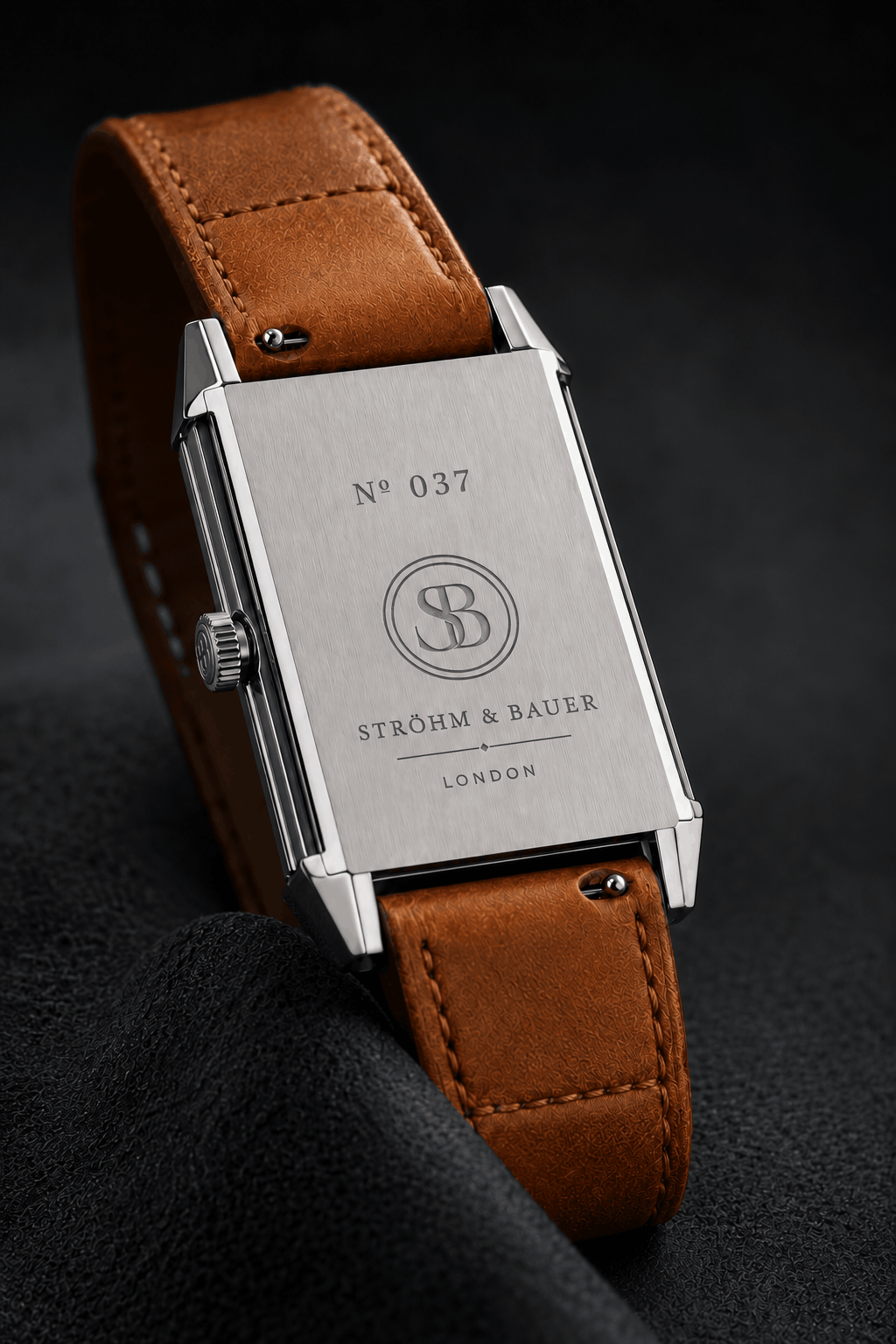
The reverse
The house mark.
The reverse of every Signet bears the Ströhm & Bauer signet — the house mark, quietly engraved into the brushed steel. What sits beneath it, and whether anything sits beneath it at all, belongs to the wearer alone.
One case. Two faces. Quietly reintroduced.
Since 1931, the reversing case — one face for the dial, one for the wearer's own mark — has been the preserve of watchmaking’s oldest houses, and priced accordingly. The Signet enters that lineage plainly, priced to be worn rather than waited for.
The reverse of every Signet bears the Ströhm & Bauer signet — the house mark, quietly engraved into the brushed steel. What sits beneath it, and whether anything sits beneath it at all, belongs to the wearer alone.
Every dimension is drawn to a purpose — the case sized to slip under a shirt cuff, the strap weighted for the wrist, the crystal shaped to catch the light.
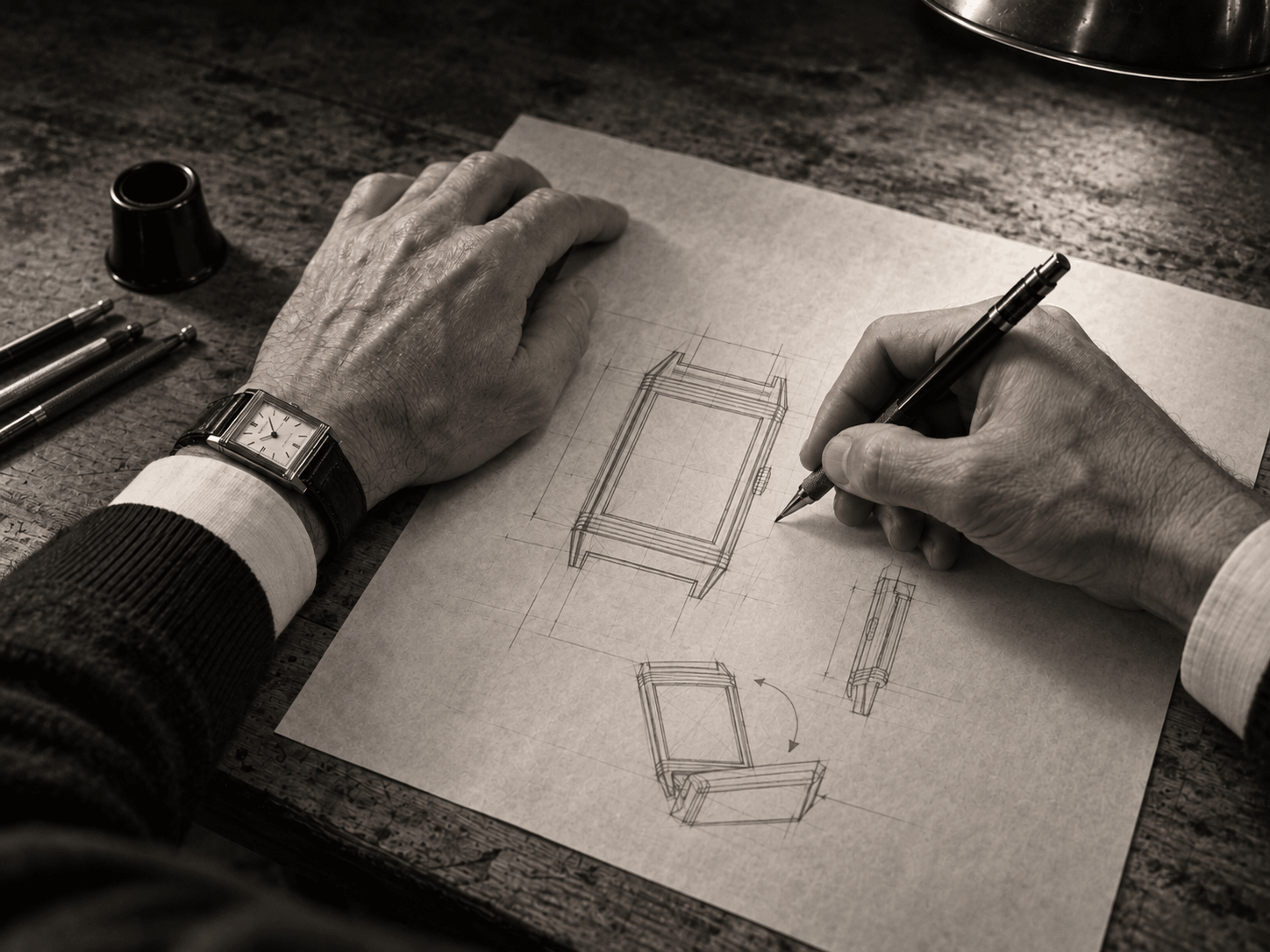
In 1931 a rectangular watch was drawn for a specific purpose — to withstand the sport its owners played. A hinged case that swung out of its carrier and rotated to protect the dial. A silver guilloche face. A plain reverse — a canvas for the owner's mark.
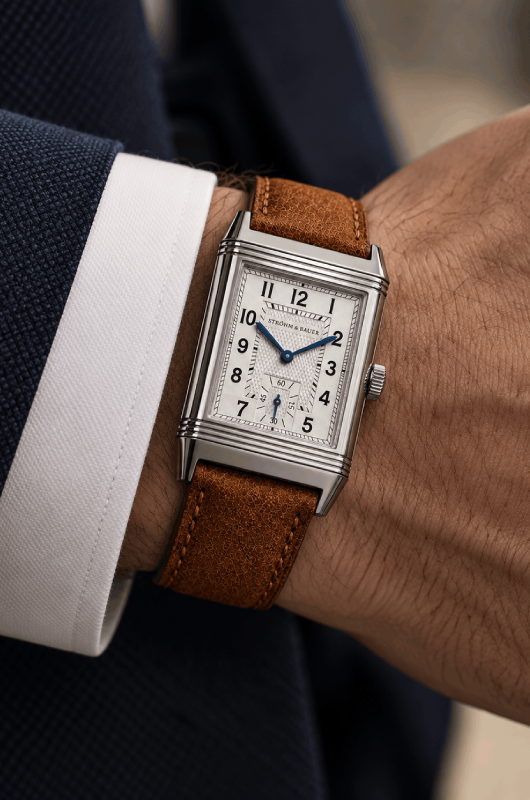
For nearly a century since, the design has remained the preserve of watchmaking's oldest houses — waited for, whispered about, kept out of reach of most of the people who admired it.
The Signet is Ströhm & Bauer's entry into that lineage. Drawn plainly, finished properly, and offered without ceremony to anyone who has watched the archetype from a distance.
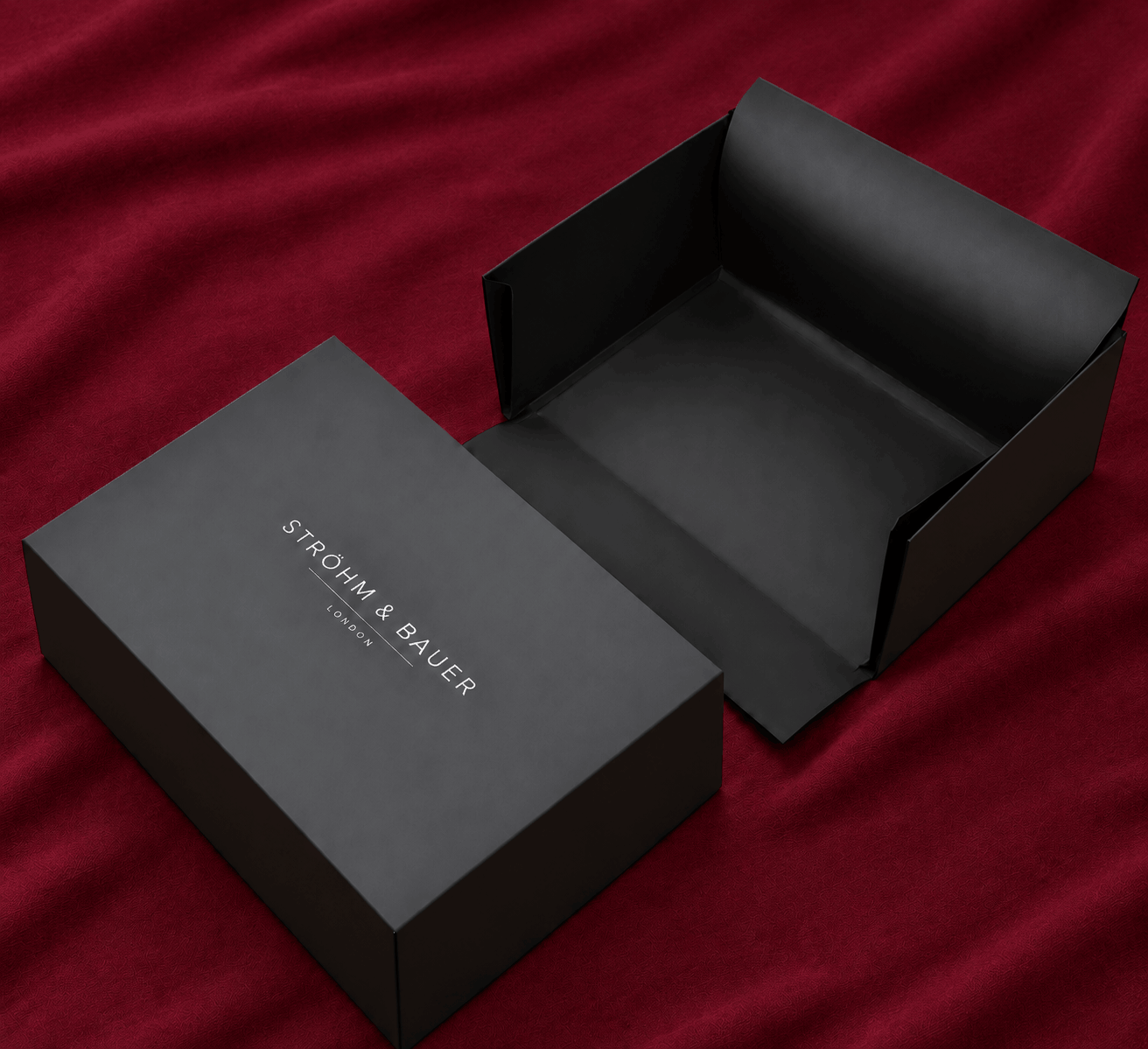
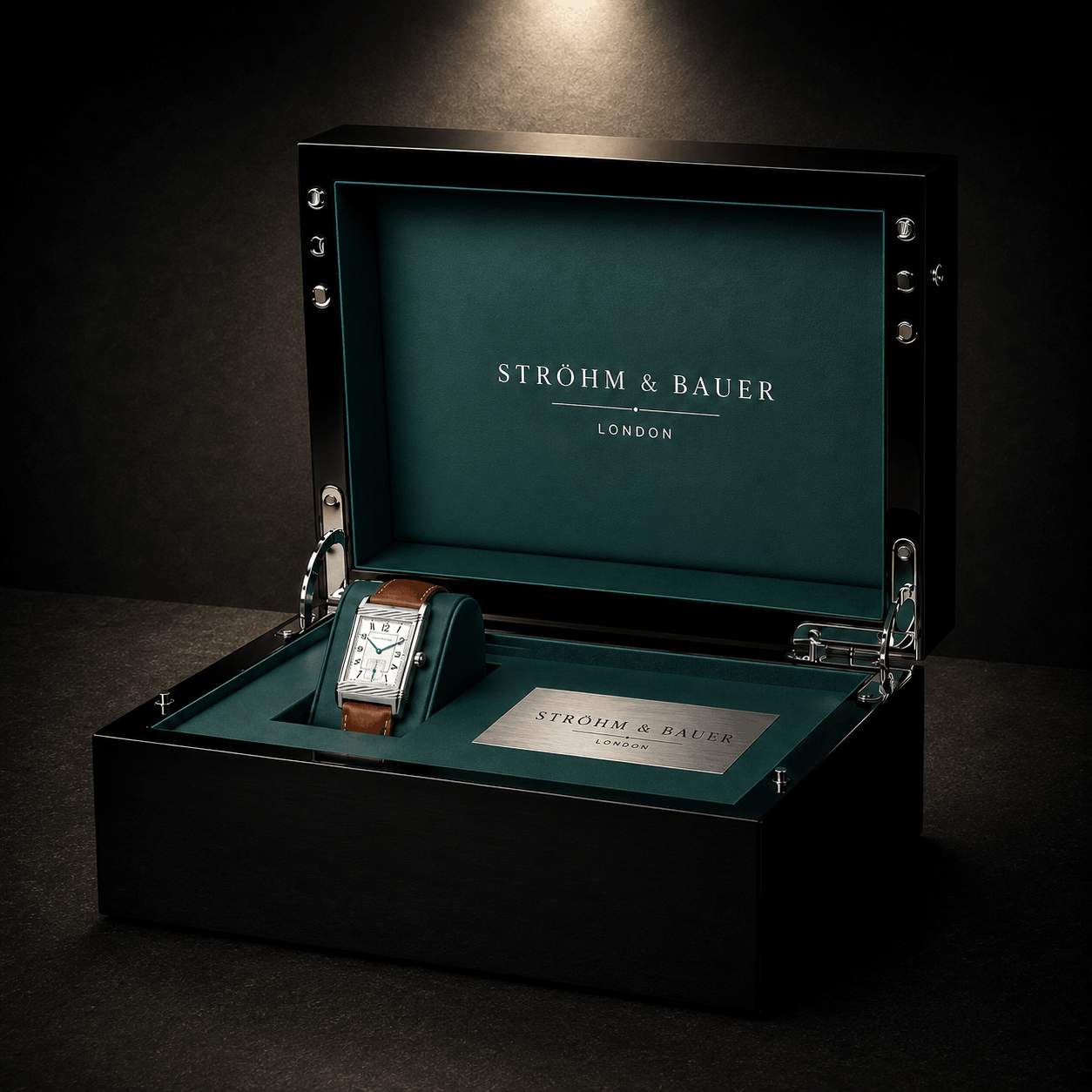
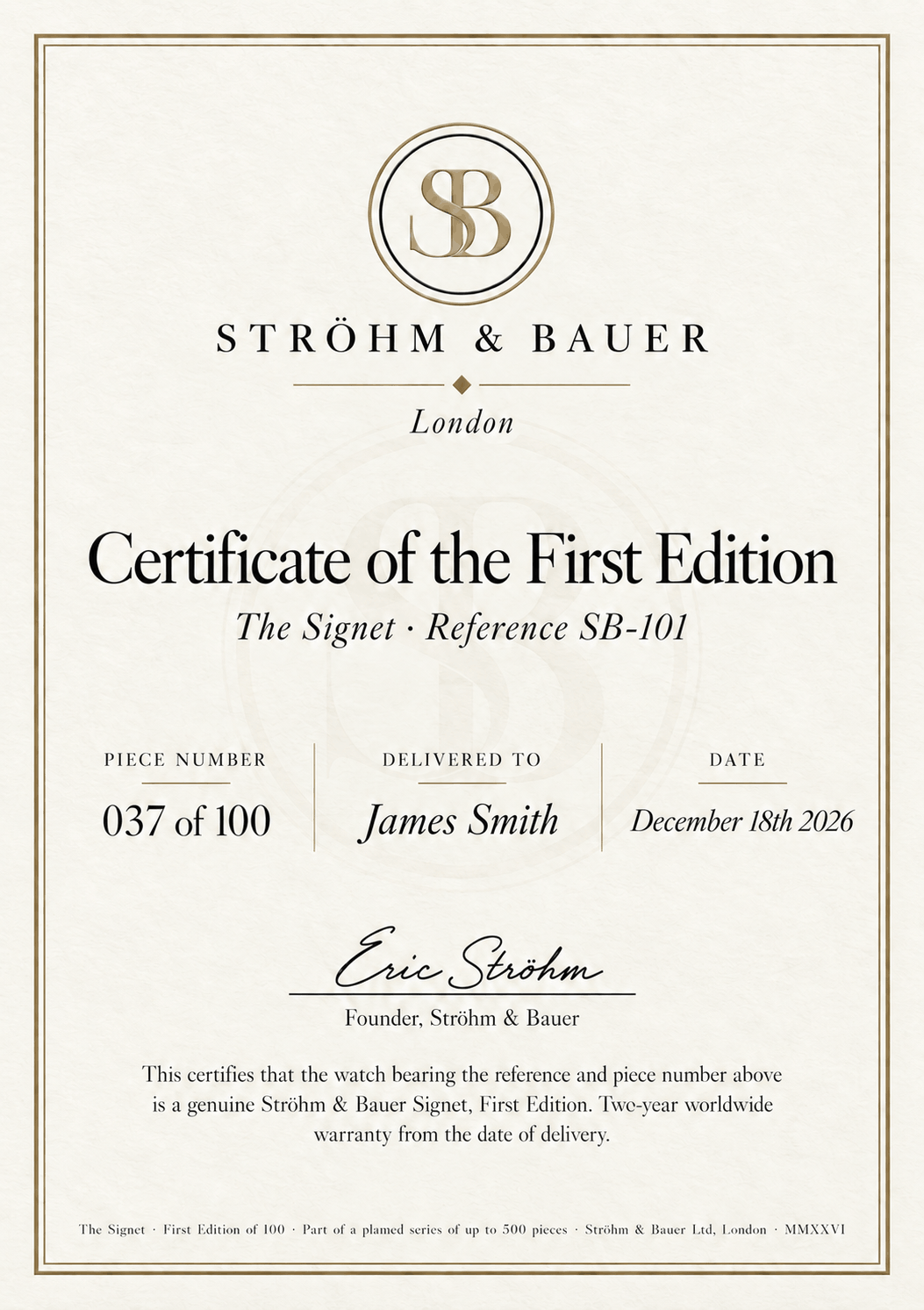
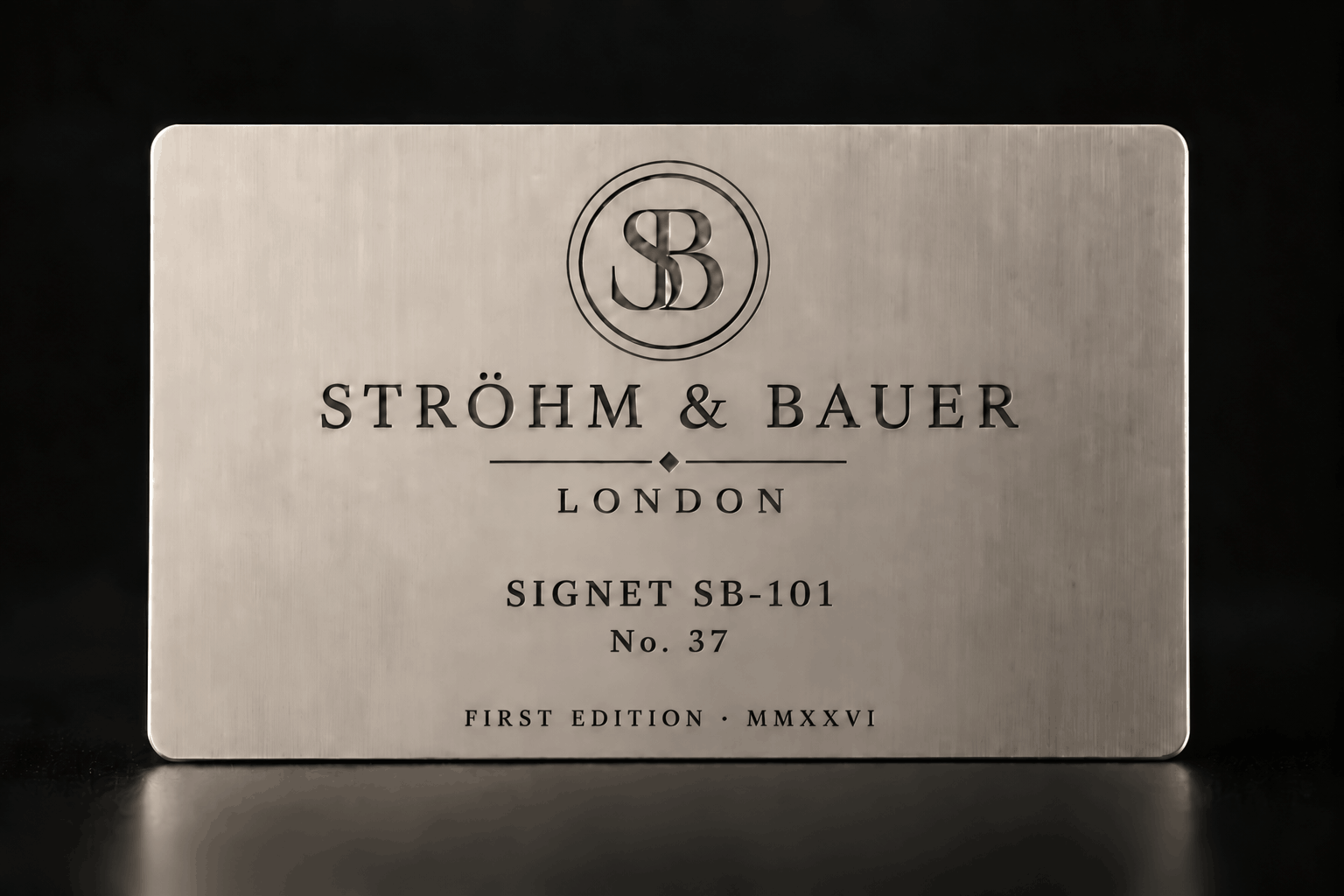
A lacquered walnut case. An engraved steel identity card carrying the Signet's reference and edition number. A hand signed certificate from the founder. And a piece whose reverse face is left plain — untouched, as it should be, until the wearer decides otherwise.
"A watch is not a purchase. It is the first sentence of a letter, addressed to whoever comes after you."
An 8-page booklet documenting the design, the specifications, and the founder's statement. One piece of correspondence, meant to be kept.
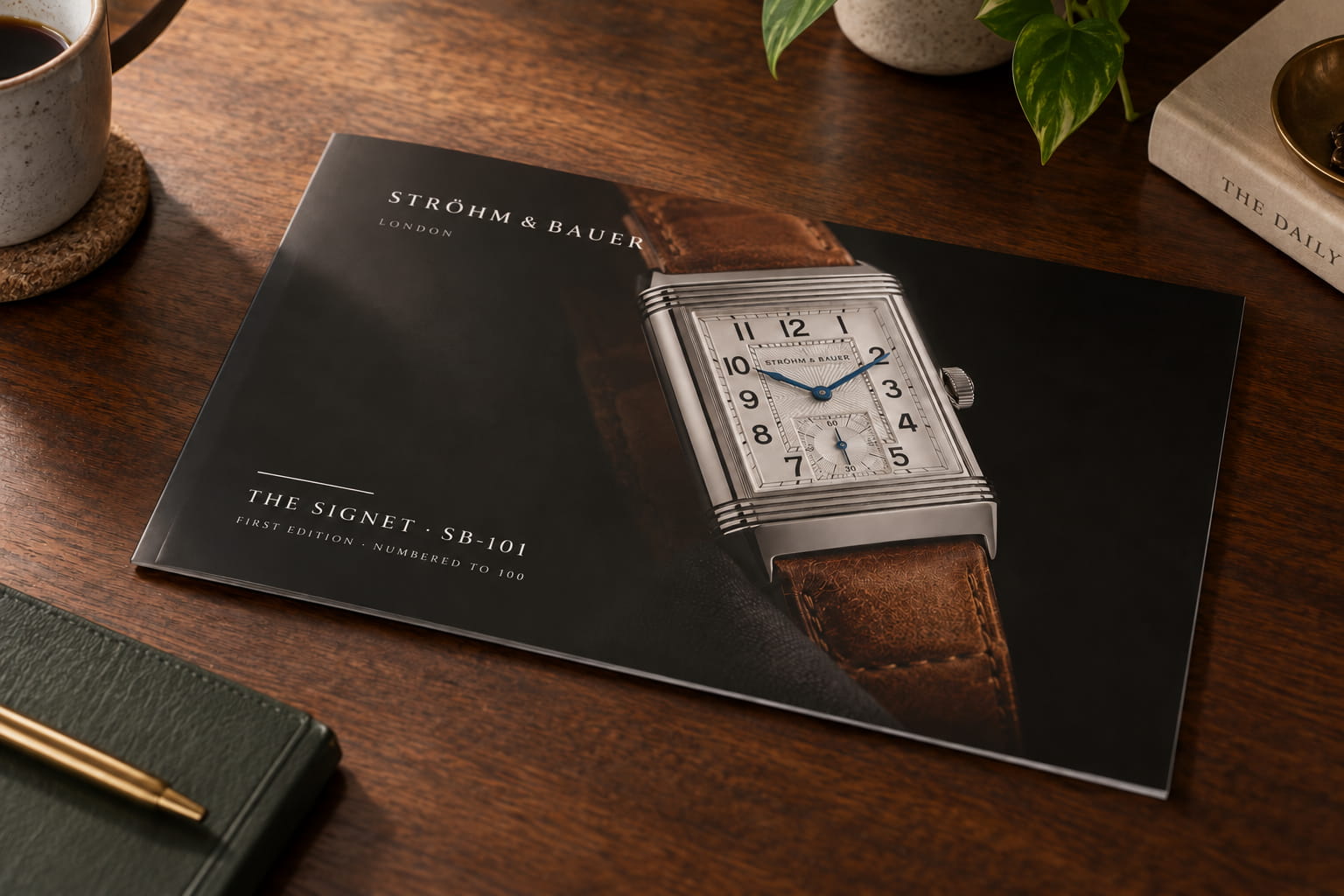
Small things, considered — the specific touchpoints that turn a purchase into a piece.
Register once. You will receive a private link to the collection at invited pricing of $845 — held below the public price of $995.